
Penn Presbyterian sits at the center of a regional expansion strategy built on three completed mergers and a structurally distinct partnership with Trinity Health.
A Framework Built on Mergers
Penn Presbyterian Medical Center ↗, one of the flagship hospitals within Penn Medicine, is the academic and clinical anchor for a deliberate regional growth effort across southeastern Pennsylvania. Over a concentrated stretch in the mid-2010s, Penn Medicine completed three hospital mergers that gave the system a substantially broader geographic footprint: Chester County Hospital joined in 2013, Lancaster General Health in 2015, and Princeton Healthcare System in 2016. Each acquisition extended the network's specialty care capabilities into communities that previously had limited connections to academic medicine.
Together, these deals established something important beyond raw size. They created referral pipelines, shared clinical protocols, and coordinated capital investment across a region where patients had historically navigated a fragmented collection of independent and faith-based systems. Penn Medicine ↗'s combined hospital and outpatient footprint now spans approximately 6.7 million square feet across the region — a scale that reflects both the pace and the ambition of that consolidation period.
An Alliance, Not an Acquisition
The more structurally interesting move came when Penn Medicine forged a clinical and programmatic partnership with two Catholic health organizations: St. Mary Medical Center in Langhorne, Bucks County, and the Mercy Health System facilities in southeastern Pennsylvania. Both organizations are members of Trinity Health, which operates as one of the largest Catholic health systems in the United States. Unlike the three mergers, this arrangement stopped well short of organizational integration. According to reporting by the Philadelphia Business Journal, it was designed as a collaboration focused on clinical programs and expanded access — not a consolidation of governance, finances, or identity.
The more structurally interesting move came when Penn Medicine forged a clinical and programmatic partnership with two Catholic health organizations: St.
That distinction matters for several reasons. Trinity Health's Catholic mission and sponsorship structure place constraints on the kinds of mergers it can enter, making a clinical partnership1 the practical path to collaboration. Penn Medicine, for its part, gains reach into densely populated urban and suburban communities without the administrative complexity of absorbing additional hospital campuses into its own system.
The three Mercy Health facilities involved sit in Philadelphia and Delaware County, within the city and its close suburbs: Nazareth Hospital in Northeast Philadelphia, Mercy Philadelphia Hospital in West Philadelphia, and Mercy Fitzgerald Hospital in Darby, Delaware County. Proximity is part of the logic here. These are community-rooted hospitals serving populations — many of them low-income or uninsured — who may not navigate easily to an academic medical center2 for specialty care. The partnership is intended to bring Penn Medicine's clinical depth to patients where they already receive care, rather than redirecting those patients across the city.
Trinity Health nationally operates across 93 community-based facilities; the Penn arrangement adds academic program depth to that community-health infrastructure without displacing its foundational mission.
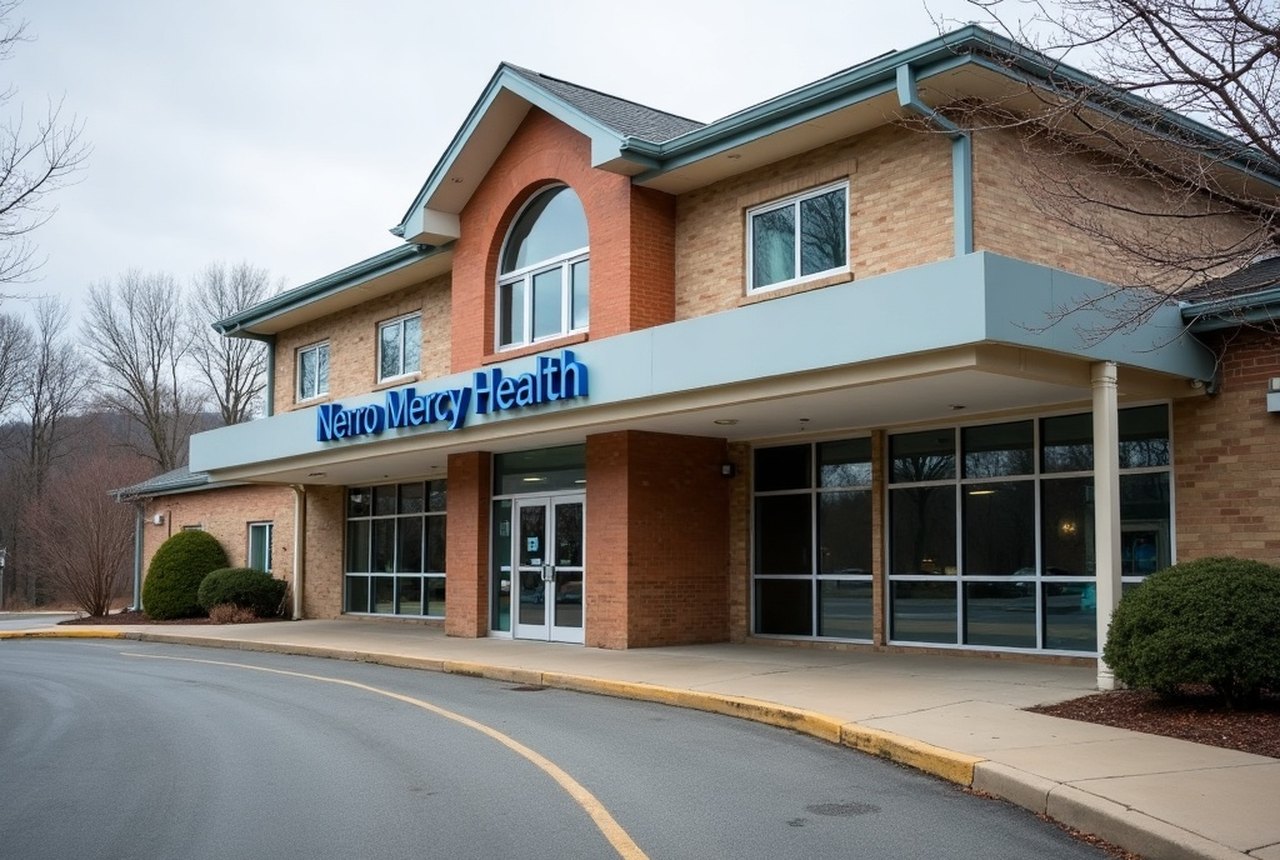
- 2013Merger with Chester County Hospital.
- 2015Merger with Lancaster General Health.
- 2016Merger with Princeton Healthcare System.
- Post-2016Clinical partnership formed with St. Mary Medical Center and Mercy Health System / Trinity Health.
Why It Matters for Access and Insurance
The policy implications of Penn Medicine's regional strategy extend into insurance and coverage territory. When an academic health system partners with community hospitals serving high concentrations of Medicaid4 enrollees — as Mercy's facilities do — the arrangement shapes how population health3 programs get funded and coordinated. Payers, including both commercial insurers and the Department of Human Services administering Pennsylvania's Medicaid program, increasingly look for health systems capable of managing risk across large, diverse populations. Broader networks tied to a single academic center make those arrangements easier to structure.
Pennsylvania's persistent opioid crisis has sharpened the case for expanded access to specialized behavioral health and addiction services in underserved communities — precisely the kind of care that academic affiliations can unlock for patients who might otherwise go without. Penn Medicine leaders have explicitly cited that public health context as one rationale for pursuing partnerships in communities facing concentrated health challenges.
For patients in Bucks County, Northeast Philadelphia, West Philadelphia, and Darby, the practical question is whether the alliance translates into improved access to specialists, smoother care coordination, and — eventually — insurance products that reflect the network's reach. Those outcomes depend on how deeply the clinical partnership is implemented, not merely how it is announced. Regional expansion strategies routinely promise more than the operational reality delivers. Penn Medicine's merger track record suggests genuine follow-through; how fully the Trinity Health partnership achieves its access goals remains the story still being written.
Who appears in this story
Notes on this story
- Clinical partnership. Collaborative care arrangement without full organizational merger.
- Academic medical center. Hospital combining patient care, research, and medical education.
- Population health. Managing health outcomes across a defined group or community.
- Medicaid. Federal-state program providing health coverage to low-income individuals.