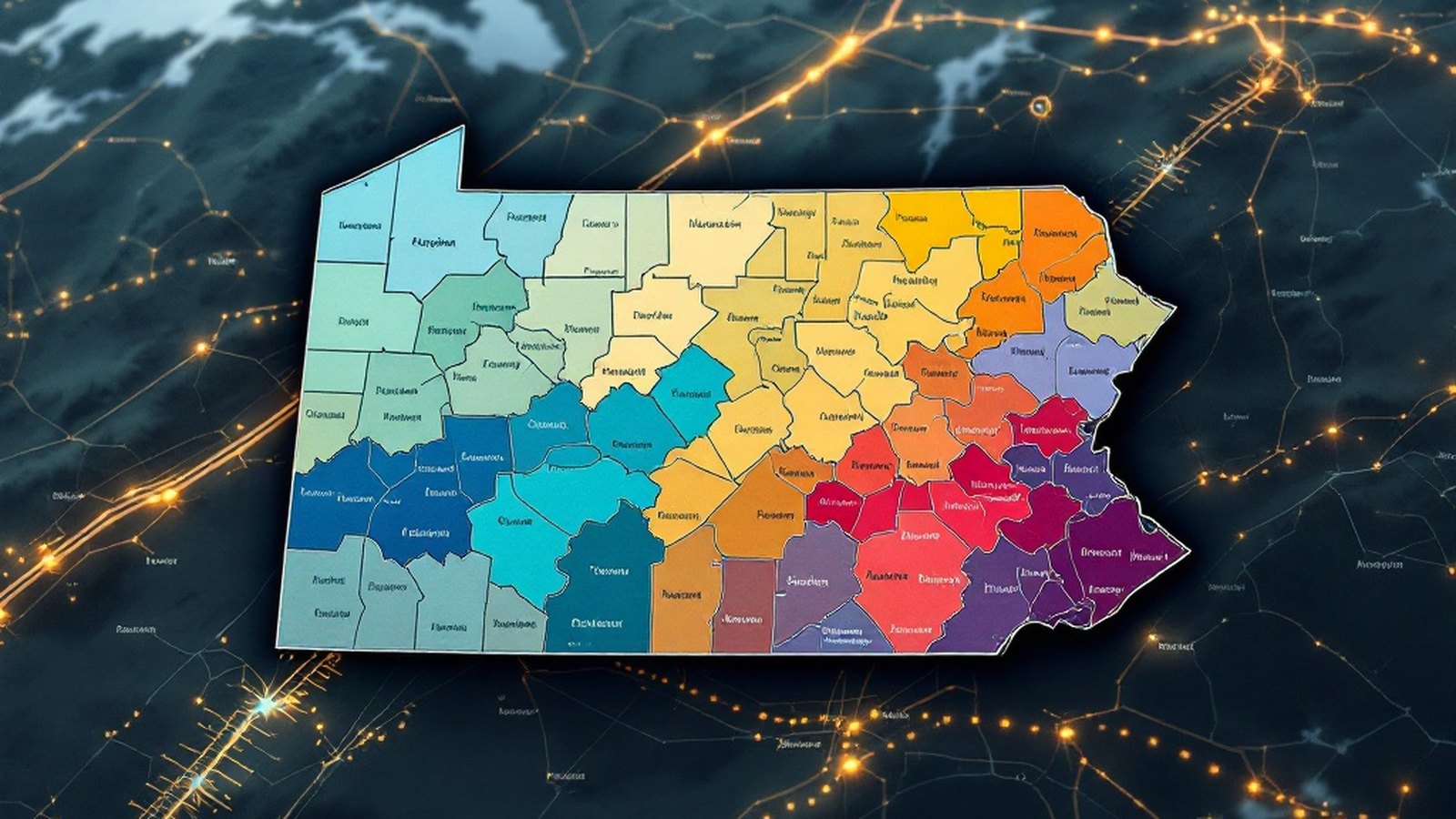
Benchmark plan prices differ enough across the state that two families with identical incomes can face very different monthly bills — depending solely on their ZIP code.
Geography Is the Hidden Variable in Your Subsidy Calculation
Pennsylvania residents shopping for coverage through Pennie ↗, the state's ACA1 marketplace, often focus on income when estimating their subsidy. Income matters enormously — but so does county. Federal premium tax credits are calculated against the second-lowest-cost silver plan available in a given county, known as the benchmark plan2. When that benchmark price is high, subsidies are larger; when it's low, enrollees in lower-cost counties may find themselves with less financial cushion, even if their income is identical to a neighbor two counties over.
The practical result: two households earning the same amount — say, a family of four near the federal poverty threshold — can end up paying meaningfully different net premiums depending on whether they live in a rural central Pennsylvania county like Centre County or in a dense urban market like Philadelphia. Insurer competition, provider contracting costs, and local healthcare utilization rates all feed into what carriers charge for their benchmark plans, and those prices can shift substantially year to year.
Rural counties frequently see fewer insurers bidding for their markets. Fewer competitors tend to produce higher benchmark premiums, which mechanically generates larger subsidies — but it also means enrollees may have fewer plan choices overall. Urban markets such as Philadelphia and its surrounding counties in southeastern Pennsylvania sometimes attract more carriers, producing more competitive benchmark prices and, in some cases, narrower subsidy amounts relative to sticker prices.
Pennsylvanians qualifying for coverage through the Pennsylvania Insurance Department ↗'s oversight framework should also remember that subsidy amounts are reconciled at tax time. If a household's income rises during the year — a second job, a raise, a new freelance contract — and the marketplace isn't updated, the difference must be repaid to the IRS. Navigator3s, the trained enrollment counselors available through Pennie at no cost, can help enrollees estimate this risk before it becomes a tax-season surprise.
The variation isn't a flaw in the ACA's design so much as an honest reflection of how local healthcare markets work. But for Pennsylvania consumers, understanding that a ZIP code can move the subsidy needle significantly is the first step toward shopping smarter — whether that means revisiting plan options during open enrollment or alerting a Navigator when life circumstances change mid-year.
Who appears in this story
Notes on this story
- ACA. Affordable Care Act; federal law expanding U.S. health coverage since 2010.
- Benchmark plan. Second-lowest-cost silver plan used to calculate federal premium subsidies.
- Navigator. Trained, unbiased professional who provides free help enrolling in health coverage.