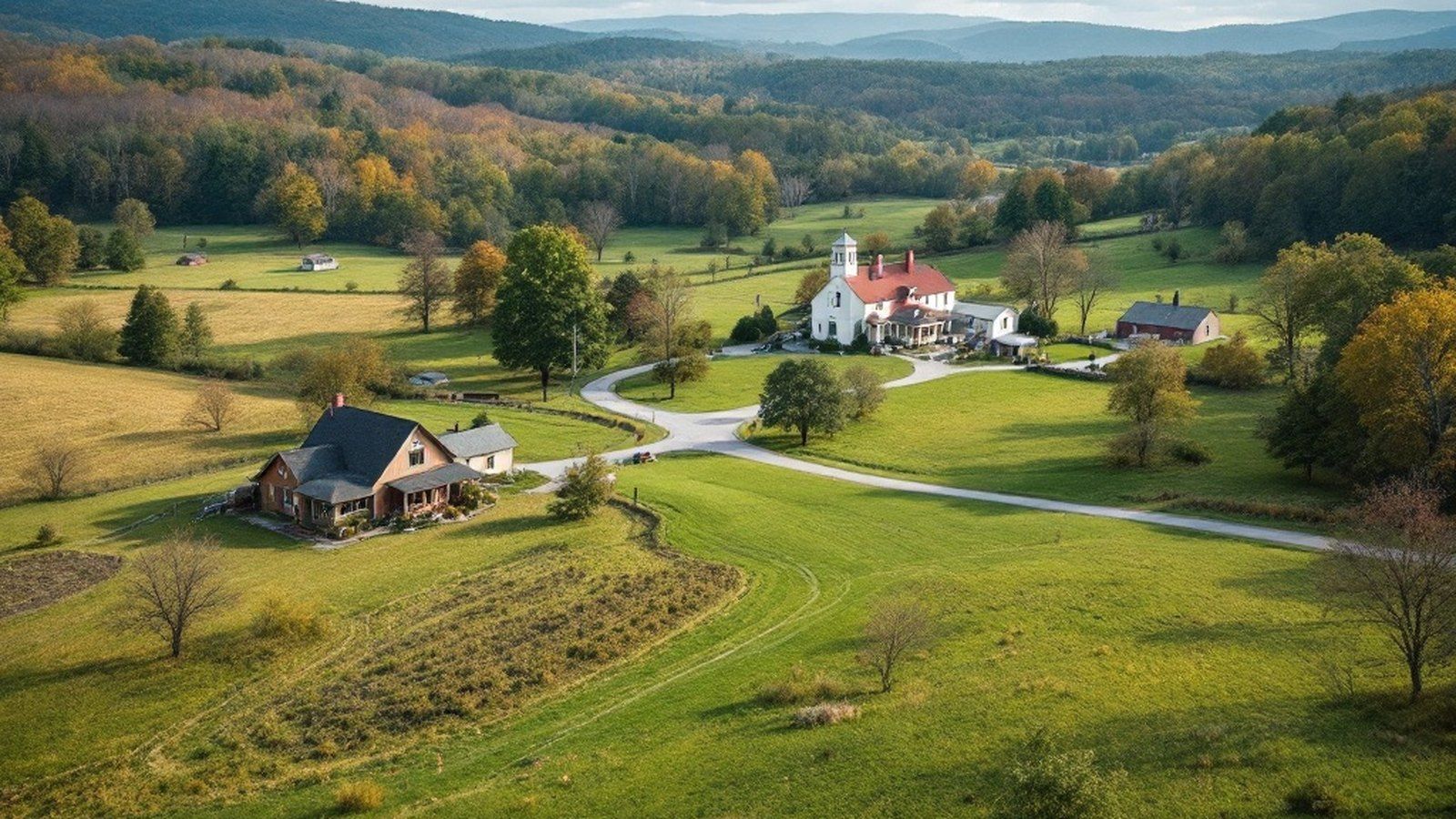
Broadband gaps across rural Pennsylvania are turning telehealth's promise into an empty one for the patients who need it most.
The Miles Between a Patient and a Screen
Pennsylvania has made meaningful strides in telehealth policy since the pandemic forced remote care into the mainstream. Reimbursement parity4 rules now require insurers to pay equal rates for virtual and in-person equivalent visits, and the state's Medicaid program has extended telehealth coverage to a wide range of services. On paper, a patient in rural Centre County can see a psychiatrist in Philadelphia without driving three hours. In practice, a slow or nonexistent internet connection can make that appointment as unreachable as the city itself.
The broadband barrier1 is not evenly distributed across the Commonwealth. Pennsylvania's most rural counties — stretching across the northcentral, northwestern, and southcentral regions — carry the heaviest connectivity deficits. In places like Lewistown in Mifflin County, where Lewistown Hospital serves a geographically scattered population, patients managing chronic illness or behavioral health conditions face a compounding problem: providers are scarce, and the digital workaround depends on infrastructure that hasn't arrived. West Virginia and Mississippi may sit at the bottom of national broadband access rankings, but Pennsylvania's rural interior has more in common with those states than its aggregate statewide figures suggest.
The federal definition of "broadband" — long set at speeds most rural households cannot reliably sustain for a video call — has complicated how policymakers measure the gap. Coverage maps submitted by internet service providers have historically overstated reach, counting a census block as "served" if even one address within it could access high-speed service. The result is a policy blind spot: state and federal funding targets areas that appear connected on a map but are functionally offline for a family a half-mile down a hollow or ridge road.
Who Gets Left Behind
The populations most reliant on telehealth are often the same ones living in dead zones. Older rural residents — a demographic AARP Pennsylvania ↗ has flagged repeatedly as underserved — are more likely to have multiple chronic conditions, less likely to drive long distances for routine follow-up care, and more likely to live in areas where the rural care gap2 is steepest. Behavioral health counseling3, post-operative follow-up, and medication management visits have all moved substantially toward telehealth delivery since 2020, making connectivity a clinical necessity rather than a convenience.
The populations most reliant on telehealth are often the same ones living in dead zones.
The Pennsylvania Department of Health and the Department of Human Services have both acknowledged telehealth access as a priority, but broadband infrastructure sits primarily in the lane of the Pennsylvania Broadband Development Authority, created in 2022 to direct federal infrastructure funding from the Infrastructure Investment and Jobs Act. The coordination between health access goals and broadband deployment timelines remains a work in progress. Healthcare advocates and the Pennsylvania State Grange, which represents rural communities, have pushed for that coordination to become more explicit — mapping known healthcare deserts against broadband deployment schedules so that medically underserved areas receive connectivity investment first rather than last.
Smartphone-only access is often cited as a partial bridge. Many rural residents do have cellular data service, and audio-only telehealth visits have been a lifeline for patients without video capability. But cellular coverage is itself patchy across Pennsylvania's rural interior, and audio-only visits are a diminished substitute for the video encounters that allow a clinician to observe a patient's appearance, mobility, and affect. Payers have begun tightening audio-only reimbursement policies, which could further narrow options for patients without reliable broadband or a device capable of video.

- 2020Pandemic accelerates mainstream telehealth adoption statewide.
- 2021Infrastructure Investment and Jobs Act passed, directing federal broadband funding.
- 2022Pennsylvania Broadband Development Authority created to distribute federal funds.
- Post-2022Broadband deployment and health access coordination ongoing.
Policy's Next Step
Mapping the problem accurately is the prerequisite for fixing it. Several health policy researchers and rural advocates have called for Pennsylvania to build a publicly accessible, regularly updated map layering telehealth utilization data against verified broadband coverage — not provider-reported estimates, but independently validated connection speeds at the household level. Such a tool would let the Pennsylvania Insurance Department, health systems, and county commissioners identify exactly where connectivity failures are translating into missed appointments and delayed care.
Telehealth's equity promise was never simply about passing a parity reimbursement law. It was about ensuring that the delivery channel actually reaches the patient. In Pennsylvania's rural counties, the signal still isn't there — and until it is, coverage mandates and clinical innovation matter very little to the person sitting in front of a frozen screen, or no screen at all.
Who appears in this story
Notes on this story
- Broadband barrier. Lack of high-speed internet limiting access to digital health services.
- Rural care gap. Disparity in healthcare access between rural and urban populations.
- Behavioral health counseling. Remote mental health and substance use therapy services.
- Reimbursement parity. Equal payment rates for remote vs. in-person equivalent services.
- Coverage mandate. Legal requirement for insurers to cover specified healthcare services.