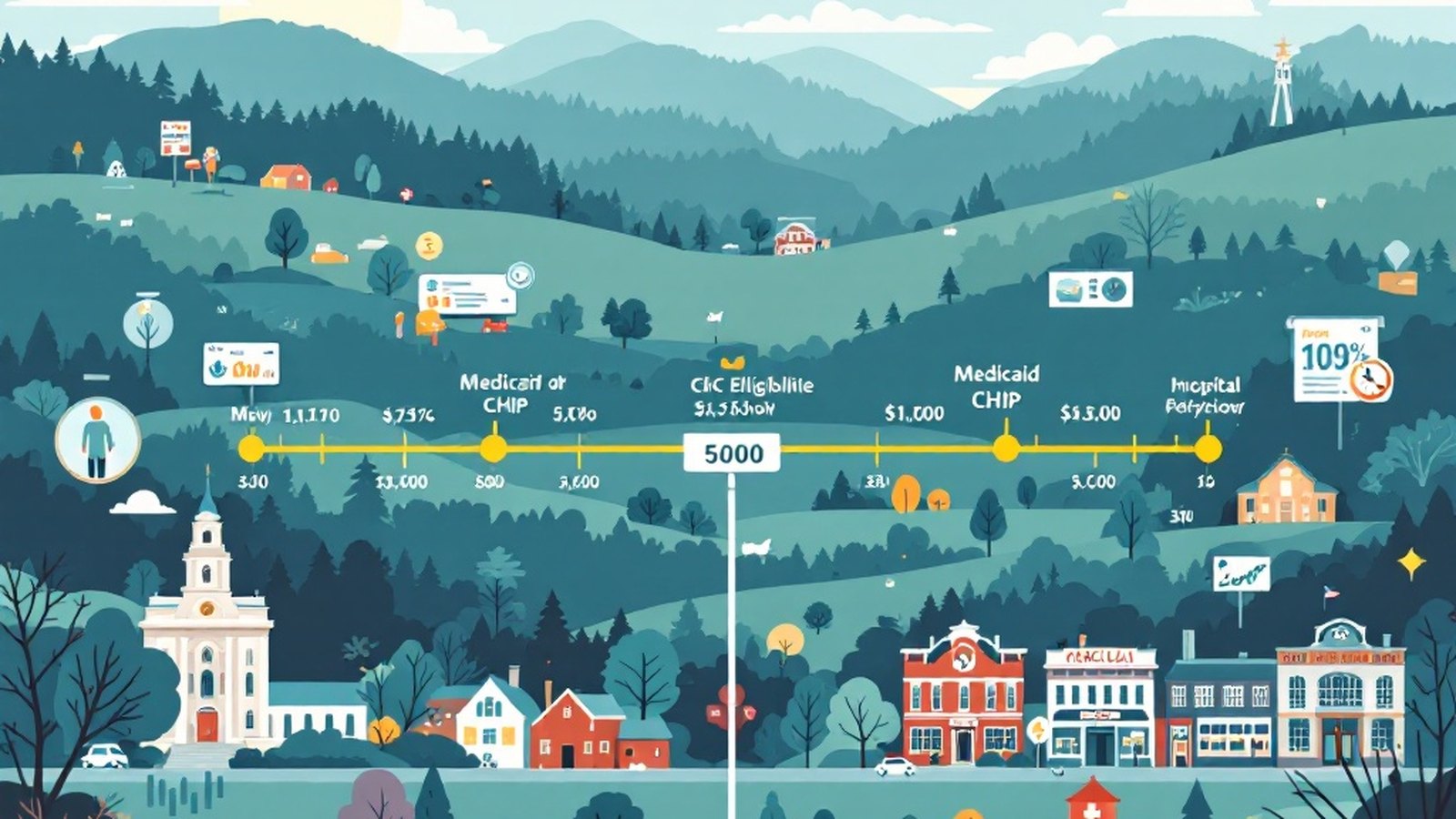
Two public programs cover Pennsylvania kids and families — but the rules aren't the same.
Pennsylvania runs two distinct public health coverage programs for children and families, and mixing them up is easy. Both are administered through the state's Department of Human Services and both are free or very low cost, but they serve different income ranges and come with different rules.
Medicaid: The Baseline
Pennsylvania's Medicaid1 program — marketed to families as PA Medical Assistance — covers children and pregnant individuals in households with incomes at or below 133 percent of the federal poverty level, and under the ACA's Medicaid expansion3, adults up to 138 percent. Coverage is comprehensive: it must include the ACA's essential health benefits4, and for children it includes a robust preventive-care package under the federal Early and Periodic Screening, Diagnostic, and Treatment mandate. There are no premiums and, for most enrollees, no cost-sharing.
Eligibility is determined on a monthly basis, meaning a family's coverage can change if their income changes. Pennsylvanians can apply through Pennie ↗, the state's ACA marketplace, or directly through the Department of Human Services — both routes feed into the same eligibility system.
CHIP: The Next Rung Up
The Children's Health Insurance Program — called CHIP2 in Pennsylvania — picks up where Medicaid leaves off. It covers uninsured children in families earning too much for Medicaid but not enough to comfortably afford private coverage, generally between roughly 133 and 314 percent of the federal poverty level depending on age. CHIP in Pennsylvania operates as its own state program rather than as part of Medicaid, though its benefit package is similarly comprehensive, but premiums and modest co-pays apply on a sliding scale for higher-income families.
The Children's Health Insurance Program — called CHIP in Pennsylvania — picks up where Medicaid leaves off.
The key distinction: CHIP is for children only. A parent or caregiver in the same household who earns above the Medicaid threshold does not qualify for CHIP and would need to shop for coverage through Pennie or an employer plan.
Why It Matters
Families near income boundaries sometimes find themselves split between programs — a child on CHIP, a parent on Medicaid, and another parent uninsured. Navigators, trained enrollment assistants available at no cost, can walk families through how income is counted, which household members qualify for which program, and whether a marketplace plan with premium tax credits might be a better fit for adults.
Both programs use continuous eligibility protections that Pennsylvania has maintained for children, limiting the risk of coverage gaps when income fluctuates. When in doubt, applying through Pennie triggers a simultaneous check for both Medicaid and CHIP — so families don't have to choose which door to knock on first.
This explainer describes how the system works across Pennsylvania. It is reporting, not guidance on your own coverage or care.
Who appears in this story
Notes on this story
- Medicaid. Federal-state health coverage for low-income individuals and families.
- CHIP. Children's Health Insurance Program; public coverage for kids above Medicaid income limits.
- Medicaid expansion. ACA provision extending Medicaid eligibility to adults up to 138% of the federal poverty level.
- Essential health benefits. Minimum services ACA-compliant plans must cover.