
Rural Pennsylvania's obstetric deserts are growing. As hospital maternity units shutter one by one, pregnant women in some counties now face drives of an hour or more to reach labor and delivery — and the distances keep lengthening.
The Quiet Disappearance of Labor Wards
It rarely happens with fanfare. A rural hospital announces it will "restructure its women's services." A community task force convenes. A few letters appear in the local paper. And then the maternity ward closes, and the next pregnant woman in that county begins calculating miles.
Pennsylvania has lost a significant share of its rural obstetric units over the past two decades, mirroring a national trend that has turned swaths of the Commonwealth into what researchers call obstetric deserts — counties or regions where the nearest hospital offering labor and delivery care is more than thirty miles away. That threshold matters not merely as a bureaucratic measure but as a lived reality: thirty miles on a rural Pennsylvania road, in winter, in active labor, with a partner driving as fast as they dare, is a medical emergency in slow motion.
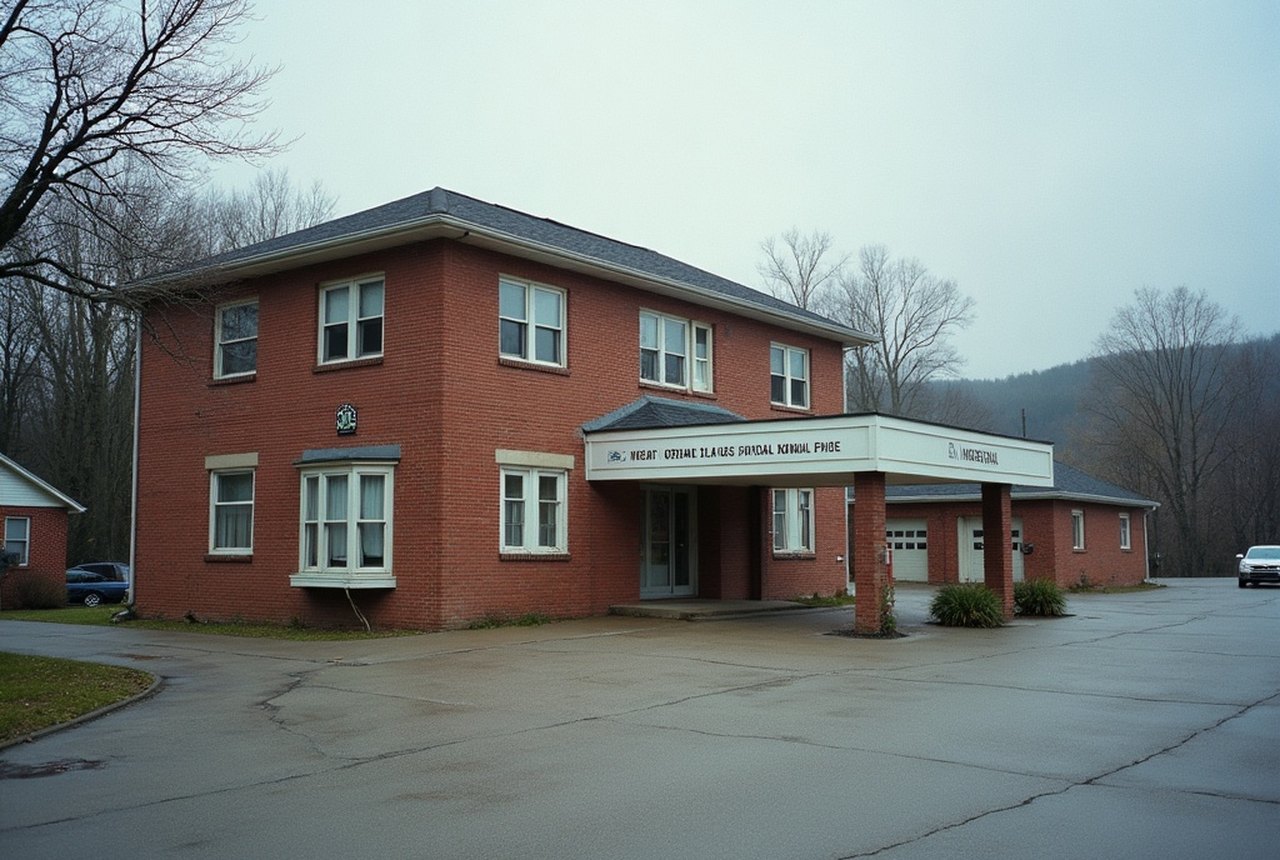
Lewistown Hospital in Mifflin County is one of the most cited examples of this pattern in central Pennsylvania. Geographically, Mifflin County sits well away from the dense hospital networks of Philadelphia or Harrisburg, and when obstetric services there have faced pressure, the surrounding population has felt it acutely. For residents of Centre County and neighboring rural counties, the nearest alternative facilities can require sustained highway travel — and rural highways are not expressways.
The closures are not random. They follow the money, and in American hospital economics, obstetrics rarely generates it. Labor and delivery units are expensive to staff around the clock: obstetricians, certified nurse-midwives, anesthesiologists, neonatal nurses, operating rooms kept ready for emergency cesarean sections. Rural hospitals — many of them already operating on thin margins as critical access facilities — have found that their obstetric volumes cannot justify those fixed costs. When a unit delivers fewer than a few hundred babies a year, the math becomes difficult to defend on a balance sheet, even as the human cost of closure is plainly visible.
Mapping the Distance
The geography of obstetric closures in Pennsylvania is not uniform, and that unevenness matters for how the state should respond. The problem is most acute in the state's expansive rural interior — the broad diagonal of counties running from the southwest toward the north-central region — and in pockets of the state's industrial northeast where hospital consolidation has reshaped the landscape.
Drive-time analysis, which public health researchers increasingly favor over straight-line mileage because it captures real travel conditions, reveals stubborn disparities. A pregnant woman in a Philadelphia neighborhood — Northeast Philadelphia, West Philadelphia, or the close-in suburbs of Bucks County — is likely within fifteen or twenty minutes of a hospital with a full obstetric unit. Penn Medicine's network, Penn Presbyterian Medical Center ↗, and the regional reach of Trinity Health all maintain labor and delivery capabilities close to the urban core. Lancaster General Health, part of the Penn Medicine system, anchors obstetric capacity in Lancaster County. Chester County Hospital covers portions of the western suburbs.
Step outside those networks and the picture changes sharply. In much of central Pennsylvania — communities in and around Mifflin, Juniata, Snyder, and Clinton counties — hospital-based obstetric care may require a drive of forty-five minutes to well over an hour under normal conditions. Add a winter storm, a flooded back road, or a car that hesitates at thirty below freezing, and a forty-five-minute drive becomes genuinely dangerous. Nationally, research published in peer-reviewed literature has documented that longer drive times to obstetric care are associated with elevated rates of out-of-hospital births, preterm birth complications, and maternal mortality — outcomes that are already worse in rural populations than in urban ones.
Pennsylvania's maternal mortality data, tracked by the Pennsylvania Department of Health, has reflected ongoing racial and geographic disparities that obstetric deserts complicate further. Black women in Pennsylvania, including those in the Philadelphia region, face maternal mortality rates that have consistently exceeded those of white women — a disparity driven by systemic factors that include, but extend well beyond, geography. In rural counties, the geographic barrier compounds existing risks related to poverty, limited prenatal care, and inadequate behavioral health support during pregnancy.
| Southeast metro corridor | Rural center & northern tier | |
|---|---|---|
| Drive to labor & delivery | 15–20 minutes | 45 minutes to well over an hour |
| Obstetric capacity | Penn Medicine network, Trinity Health, Lancaster General | Single low-volume units at critical-access hospitals |
| When a unit closes | Care shifts a few blocks | Care shifts one or two counties away |
Why Closures Accelerate
Understanding why obstetric units keep closing requires looking at the structural pressures hospitals face, not just individual facility decisions. Medicaid5 finances a substantial share of births in rural Pennsylvania, and Medicaid reimbursement rates for obstetric services have historically lagged behind the actual cost of providing them. When a rural hospital's payer mix2 skews heavily toward Medicaid — as it typically does in low-income rural counties — the gap between reimbursement and cost widens into something unmanageable.
Thirty miles on a rural Pennsylvania road, in winter, in active labor, is a medical emergency in slow motion.
Workforce shortages compound the financial pressure. Recruiting obstetricians and certified nurse-midwives to rural Pennsylvania is a persistent challenge. Physicians completing residencies gravitate toward urban academic medical centers, and rural communities often cannot match the salaries, collegial environments, or professional development opportunities those centers offer. Some rural hospitals have turned to employed locum tenens3 physicians — traveling providers who work short rotations — to maintain coverage, but that model is expensive and creates discontinuity of care that patients and providers alike find unsatisfying.
The consolidation of hospital systems has reshaped Pennsylvania's landscape significantly over the past decade. Larger health systems, including Trinity Health ↗ and the Penn Medicine network, have absorbed smaller rural hospitals, bringing capital and management expertise but also imposing system-wide cost calculations that can accelerate the closure of low-volume service lines. A system headquartered in a major metro may rationally determine that consolidating obstetric care at a larger regional hub is more efficient than subsidizing a unit delivering two hundred babies a year in a rural affiliate — even if that calculation means women in the rural affiliate's catchment area must now drive an hour each way.
What Longer Drives Actually Mean
The policy debate around obstetric deserts sometimes abstracts the experience into statistics. It is worth being concrete about what a closure means for a family in rural Pennsylvania.
Prenatal care changes first. When the nearest labor and delivery unit is in a city an hour away, many women — especially those without reliable transportation or flexible work schedules — begin their prenatal care later and attend fewer appointments. Transportation is not a trivial barrier: rural Pennsylvania has limited public transit, and many households have one vehicle shared among working adults. A prenatal visit might require arranging childcare, taking half a day off work, and paying for gas — each of which is a genuine obstacle in a county with median incomes well below state averages.
Emergency situations compress the stakes dramatically. Obstetric emergencies — placental abruption, eclampsia, postpartum hemorrhage — can become fatal within minutes without hospital intervention. Ambulance response times in rural Pennsylvania are already extended compared to urban areas, and when the closest obstetric unit has closed, the EMS crew must transport a patient further down the highway, burning minutes that matter.
Births that occur en route or at home because the mother could not make it to the hospital in time carry their own risks. Pennsylvania emergency medical services are not uniformly equipped or trained for out-of-hospital deliveries, and neonatal emergencies in those circumstances are especially difficult to manage.
Postpartum care is disrupted too. Home visiting programs and postpartum follow-up exist in Pennsylvania through programs administered by the Department of Human Services, but they are unevenly distributed geographically, and the workforce constraints that close maternity wards also limit community-based support services.

Paths Forward — and Their Limits
No single policy fixes an obstetric desert, but researchers and advocates have identified a range of interventions that could slow or partially reverse the trend. Reimbursement reform — raising Medicaid rates for obstetric care to more closely reflect actual costs — could improve the financial calculus for rural hospitals. The Pennsylvania Department of Health and the General Assembly have the tools to pursue this, though prior efforts have moved incrementally.
Expanding the scope and reimbursement of certified nurse-midwives offers another lever. Midwives can manage low-risk births safely and cost-effectively; states that have removed unnecessary supervisory requirements and achieved reimbursement parity for midwifery care have seen meaningful improvements in rural access. Pennsylvania's licensing framework, overseen in part through the House Professional Licensure Committee, has historically been restrictive in ways that limit midwifery practice.
Telemedicine cannot replace labor and delivery care, but it can extend the reach of prenatal monitoring, help identify high-risk pregnancies earlier, and connect rural patients with maternal-fetal medicine specialists in Allentown, Harrisburg, or Philadelphia who might otherwise be inaccessible. The broadband gap remains a real obstacle in parts of rural Pennsylvania — connectivity and obstetric access are, in this respect, the same problem.
Organizations like AARP Pennsylvania and the Pennsylvania State Grange have both flagged rural healthcare access as a priority concern for their constituencies, and their advocacy carries weight in Harrisburg. But advocacy, reimbursement patches, and telehealth extensions are partial remedies. For the mother who woke up in labor at two in the morning in Mifflin County, the maternity ward that closed is not coming back. The distance she must travel is real, and it is growing.
Who appears in this story
Notes on this story
- Obstetric desert. County where the nearest labor and delivery hospital is 30+ miles away.
- Payer mix. Breakdown of how a hospital's patients pay (Medicaid, Medicare, private insurance, uninsured).
- Locum tenens. Traveling physician hired temporarily to fill staffing gaps.
- Reimbursement parity. Equal payment rates for equivalent services regardless of provider setting.
- Medicaid. Federal-state program providing health coverage to low-income individuals.
- Behavioral health. Field addressing mental health and substance-use disorders.